
Protecting Your Building from Termites and Rot
Questions? Ask our Buyer's Guide, or call or text (888) 474-9876.
Solid wood lasts for decades when it's protected. Here's how termite protection actually works, what's already handled, and the simple step to add in higher-risk regions.
Your Foundation Beams Are Treated
Every ohubo building sits on a solid floor with pressure-treated foundation beams. That matters because termites almost always attack from the ground up, so the wood closest to the ground is already protected — just keep it off the soil, lifted on its foundation with airflow underneath, and you've handled the biggest risk.
Know Your Termite
The right level of protection depends on the type of termite common in your area:
| Termite type | Where in the US | How it attacks / what stops it |
|---|---|---|
| Subterranean (most common) | Every state except Alaska — worst in the Southeast, Mid-Atlantic and South; also the Midwest and parts of the Northeast | From the ground up through the foundation. Your treated foundation beams plus keeping the building off the soil handle most of this; add a borate treatment on the lower walls in active areas. |
| Drywood | Coastal South, Florida, the Gulf, coastal California | From the air, into the wood itself — soil treatment won't help. Treat the wood with a borate product. |
| Formosan (“super”) | Gulf Coast, Hawaii, Southeast | Like drywood but far faster and larger colonies — treat the wood and act early. |
| Dampwood | Pacific NW coast, desert Southwest, South Florida | Only attacks wet wood in soil contact. A proper foundation, off the ground, with good drainage is your main defense. |
Know Your Zone (HUD TIP Map)
The U.S. Department of Housing and Urban Development (HUD) and the International Residential Code use a Termite Infestation Probability (TIP) map that divides the country into four zones. Zones follow climate, not state lines — if you're near a boundary, use the higher zone or ask a local pest-control company. Find yours to see how much protection to add for your area:
| TIP zone | States (main) | Recommended protection |
|---|---|---|
| Very heavy (1) | FL, GA, AL, SC, HI, most of California; the Gulf Coast of LA, MS and TX | Borate wood treatment + soil barrier or bait stations |
| Moderate to heavy (2) | NC, VA, TN, KY, AR, OK, MO, KS, IL, IN, MD, DE, DC; parts of OH, NM, AZ and inland TX, LA and MS | Borate wood treatment + optional soil barrier |
| Slight to moderate (3) | NJ, PA, NY, CT, RI, MA, WV, IA, NE, CO, UT, NV, ID, OR, WA; parts of MI, WI, MN, SD, MT, WY, VT and NH | Borate wood treatment (minimum recommended) |
| None to slight (4) | AK, ND, northern ME and the coldest parts of MN, WI, MI, MT, WY, SD, VT and NH | Optional — still wise for longevity (also stops carpenter ants, beetles and decay fungi) |
How to Tell if Termites Are Around
You rarely see termites themselves — you see their signs. A quick look once or twice a year is all it takes:
- Mud tubes — pencil-width tunnels of dried soil running up a foundation or wall (the classic subterranean sign).
- Small piles of what looks like sawdust or pellets near the base (drywood droppings).
- Wood that sounds hollow when tapped, or paint that looks blistered.
- Discarded wings near windows or the door after a warm, damp evening (a swarm).
If you spot any of these, a local pest-control pro can confirm and treat — it's routine, and caught early it's cheap.
Treatment Methods (For Most Owners, Method 1 Alone Is Plenty)
Method 1 — Borate wood treatment (best for a DIY kit).
A naturally-occurring mineral salt you brush or spray onto bare wood once the building is up, before paint or stain. One coat guards against termites, carpenter ants, wood-boring beetles and decay fungi at once. You'll find three common types at home-improvement stores and online:
- Glycol-based concentrates — the deepest penetration.
- Powders you mix with water — the budget option.
- Ready-to-use sprays — the simplest.
Borates dissolve in water, so treat the assembled building, inside and out — or brush it on board by board as the walls go up, but only if the roof boards go on the same day. Never treat loose boards and leave them lying out: damp boards can warp within hours. Then seal it in with your paint or stain, and don't leave treated wood out in the rain. Always follow the label — these are registered wood-treatment products. A borate treatment, paint or stain doesn't affect your warranty — finishing the wood is part of looking after it. Budget roughly $100–$350 in materials depending on model size — the same optional line you'll see in our Project Budget tool.
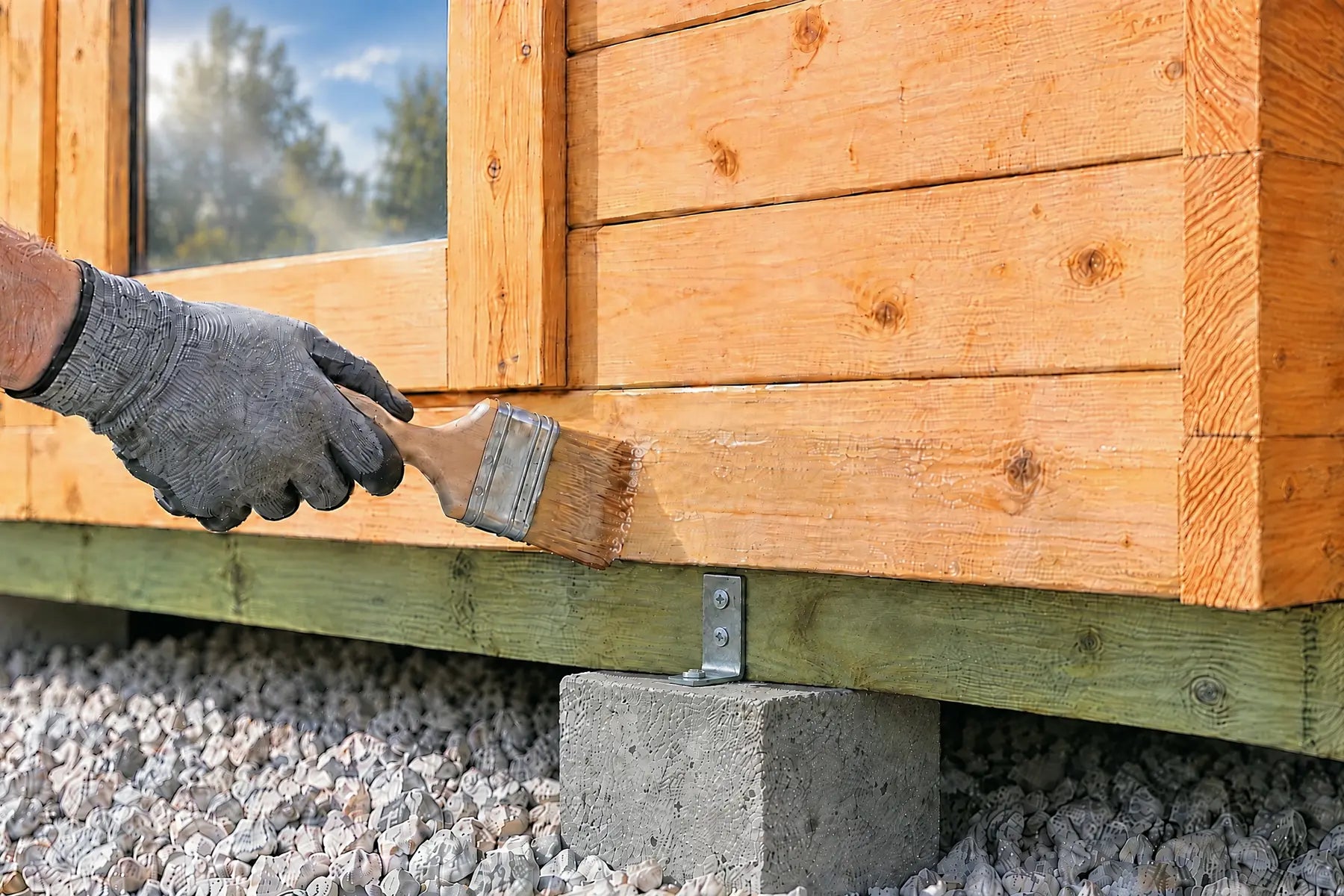
Estimate your termite protection cost in the Project Budget tool →
Method 2 — Soil / perimeter barrier.
A liquid termiticide applied to the soil around the foundation. Worth adding alongside the wood treatment in high-risk areas (TIP zones 1–2).
Method 3 — Bait stations.
In-ground stations monitored by a pest-control pro — the most hands-off long-term option for the heaviest zones.
Keep It Protected (Any Climate)
- Keep the building lifted on its foundation with airflow underneath — damp, ground-contact wood is what attracts trouble.
- Keep soil, mulch and firewood back from the base.
- Finish the exterior (paint or stain) and keep it up — see our Paint & Stain Guide.
- Have a look each spring; catching anything early is easy and cheap.
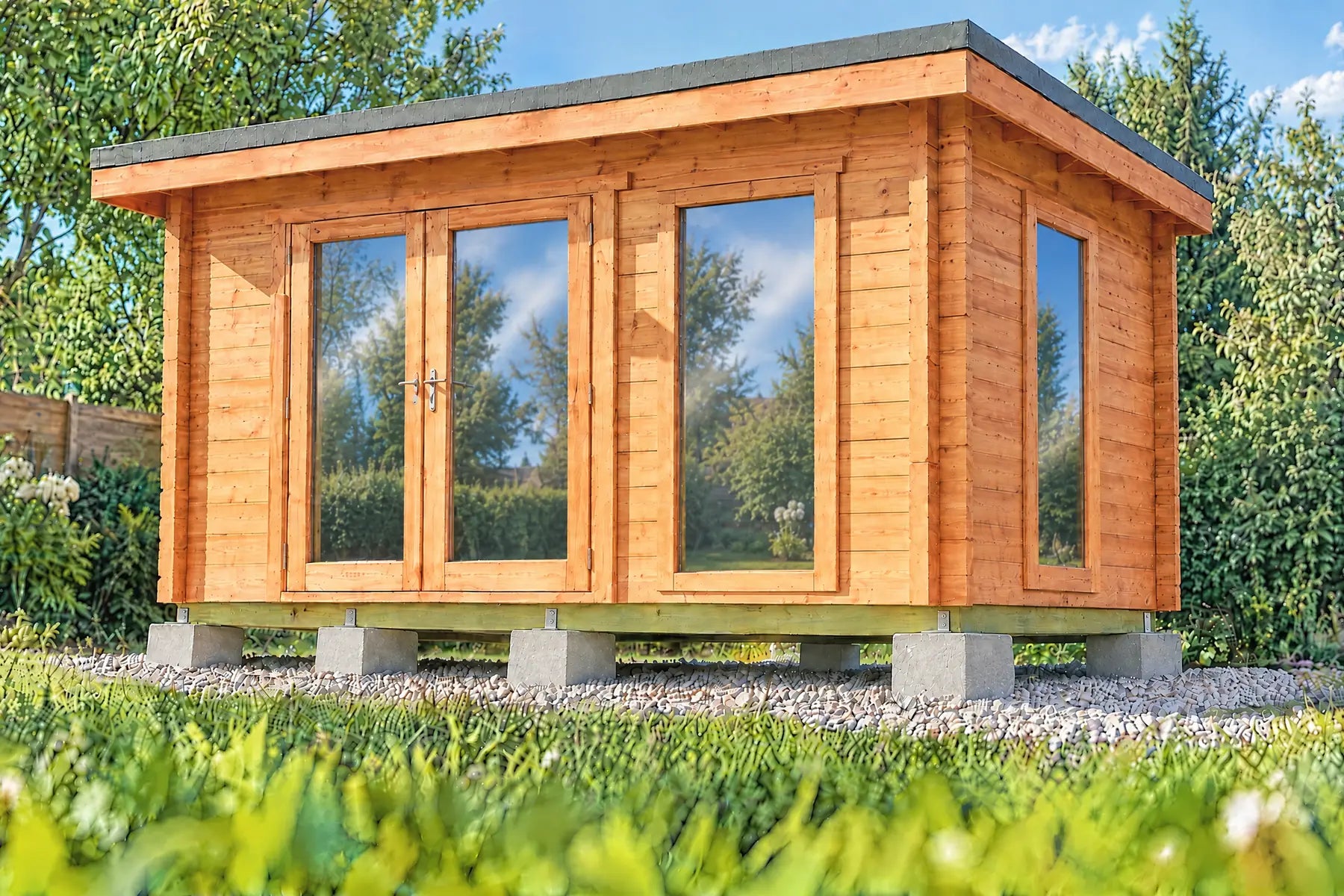
Choosing and applying the exterior finish: See our Paint & Stain Guide →
Stuck on your project?
Ask our Buyer's Guide, or call or text us — real people who know every model, happy to talk you through any step.